What are the benefits of healthy eating?
If eating healthy was as easy as grabbing a quick bag of chips, we’d all do it. Even if it’s hard to start, the benefitsbenefitsThe health care items or services covered under a health insurance plan.
Read more » of eating healthy can follow us for years to come. Not only that, setting up healthy habits in the home can be beneficial for your family too. Keep reading to learn about the benefits healthy eating can have on your body, plus a good way to make long-term changes.
What are the benefits of healthy eating for adults?
Healthy eating isn’t the same as dieting to lose weight. When you eat healthy food, you are helping your body:
- Live longer
- Maintain skin, teeth, and eye health
- Support muscles
- Boost the immune system
- Strengthen bones
- Decrease the risk of heart disease, type 2 diabetes, and some cancers
- Support a healthy pregnancy or breastfeeding journey
- Aid digestion function
- Meet and keep a healthy weight
What are the benefits of health eating for children?
Children can also benefitbenefitThe health care items or services covered under a health insurance plan.
Read more » greatly from a healthy diet. When kids eat health food, they are helping their bodies:
- Maintain skin, teeth, and eye health
- Support muscles
- Meet and keep a healthy weight
- Strengthen bones
- Support brain development
- Support growth
- Boost the immune system
- Aid digestion function
What does healthy eating look like?
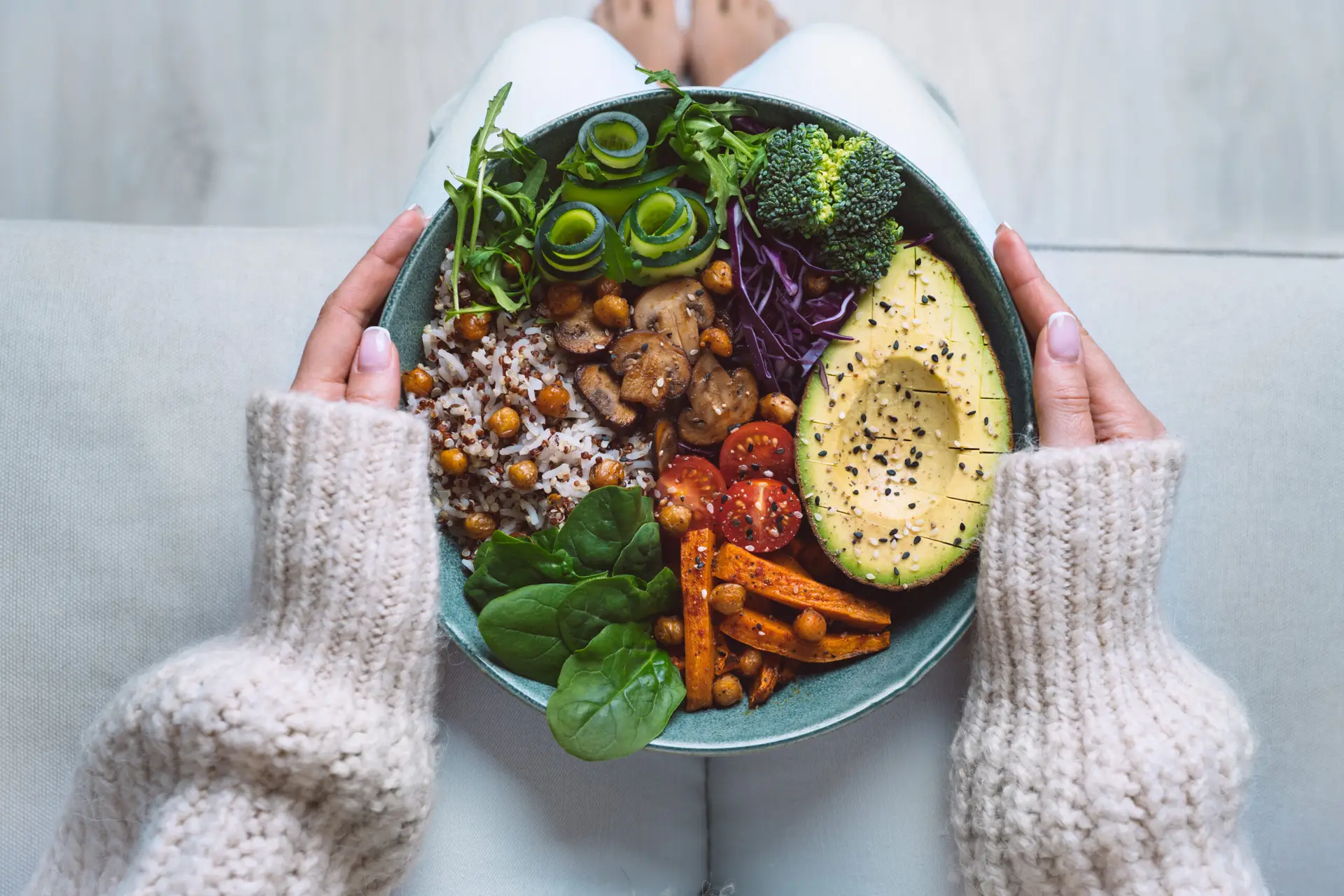
The USDA recommends nutrient-dense foods and drinks that stay within reasonable calorie limits. These include:
- Vegetables of every variety: green, red, orange, starchy or leafy; they all count
- Fruits: whole fruits are especially recommended
- Grains: try to make half a whole grain
- Dairy: fat-free or low-fat milk, yogurt, cheeses, and even lactose-free, fortified soy, and yogurt alternatives count
- Protein: lean meat, poultry, eggs, seafood, beans, nuts, and soy products can all count as a healthy protein source
- Oil: vegetable oils and those in seafood and nuts are also part of a healthy diet
Remember that these foods should also reflect your personal preferences and health requirements, your cultural foods, and your budget. If eating certain food groups is not good for you, don’t worry. There is no one way to be eating a healthy diet.
Try to avoid overindulging in added sugars, saturated fats, sodium, and alcohol. A limited amount of these food categories is okay, but too much is not good for your body
How making eating healthier a long-term change
Eating well isn’t just a “diet” that’s here today and gone tomorrow. Instead, consider it a change in lifestyle that will positively affect you and your family for years to come. The Centers for Disease Control and Prevention recommend a 3-part approach to making changes: reflect, replace, and reinforce.
Reflect
Look at your current eating habits. Not everything you’re doing now is bad, but there is a reason you’re trying to improve. Consider why you’re eating or drinking in unhealthy ways, what those are, and if there is anything that makes you reach for those things. Knowing why you’re eating or drinking poorly may help you break those habits.
Replace
Try replacing your unhealthy eating habits with good ones. If you’re eating too fast, trying actively eating more slowly. If you’re eating emotionally or out of boredom, try to find something to feel better or occupy your time outside of the kitchen, like calling a friend or starting a new hobby. And if eating unhealthy food is your hardest habit, try replacing your snacks and planning healthy and balanced food ahead of snack and mealtimes.
Reinforce
Remember that every change doesn’t have to happen at once. You may even find yourself falling back to bad habits. It takes time to replace our bad habits, and too much change too soon can be overwhelming.
Don’t beat yourself up if you fall back into a bad habit. Reflect on why that habit resurfaced and how you can return to a healthy replacement.
Don’t forget to check in with your doctor
Anytime you plan major changes to your lifestyle or diet, be sure to contact your regular physician. They may want to address any medical conditions specifically or help you regulate your diet in a clinical way.
You can also reach out to a registered dietitian. They can help you ensure your new eating habits are appropriate and will help you improve your health.
You can start today
Whatever your age, you can start making positive lifestyle changes today. Eating well can help you stay healthy and independent — and look and feel good — in the years to come.
Want to start improving your overall health too? A health insurance plan may help you pay for regular doctor visits and could cover preventive health screenings, prescription medications, and more. Contact a licensed insurance agent at (866) 783-6441 today to get started, or explore your coverage options online today.
Benefits of Health Eating. Centers for Disease Control and Prevention. Retrieved from https://www.cdc.gov/nutrition/resources-publications/benefits-of-healthy-eating.html. Accessed on June 27, 2023.
Dietary Guidelines for Americans. USDA. Retrieved from https://www.dietaryguidelines.gov/sites/default/files/2021-03/Dietary_Guidelines_for_Americans-2020-2025.pdf. Accessed on June 27, 2023.
Improving Your Eating Habits. Centers for Disease Control and Prevention. Retrieved from https://www.cdc.gov/healthyweight/losing_weight/eating_habits.html. Accessed on June 27, 2023.
This advertisement contains information compiled by HealthMarkets Insurance Agency, Inc. HealthMarkets Insurance Agency, Inc. does not represent that these are statements of fact. Please consult directly with your primary care physician if you need medical advice.