Medicare Advantage premiums: What to expect in 2025
Curious about Medicare Advantage premiumspremiumsThe amount you pay for your health insurance every month.
Read more » in 2025?
You know…like how much your premiumpremiumThe amount you pay for your health insurance every month.
Read more » will cost. Or maybe you’ve got questions about Medicare Advantage plan options, pricing and coverage. Or maybe you’ve heard some Medicare Advantage premiums are as low as $0 a month.
Here’s the thing…Medicare Advantage premiums can vary widely depending on the plan you choose. Want to know what to expect in 2025?
In this article, we’ll walk you through what to know about Medicare Advantage premiums:
- What are Medicare Advantage premiums?
- Who pays Medicare Advantage premiums?
- 4 tips for paying Medicare Advantage premiums
- Medicare Advantage premiums in 2025
- Why are some Medicare Advantage premiums as low as $0 a month?
- Factors that affect Medicare Advantage costs
Ready to get started?
What are Medicare Advantage plan premiums?
Here’s the simple answer. Medicare Advantage plan premiums are the monthly payments you make to maintain a Medicare Advantage (Medicare Part C) plan.1
- Medicare Advantage plans are offered by private insuranceprivate insuranceHealth care coverage provided by a private insurance company rather than the government.
Read more » companies approved by Medicare, covering all the benefitsbenefitsThe health care items or services covered under a health insurance plan.
Read more » of Original Medicare (Parts A and B).1 - However, Medicare Advantage plans may cover additional health and wellness services, too.
Who pays Medicare Advantage plan premiums?
When you enrollenrollThe process by which an eligible person becomes a member of an insurance plan.
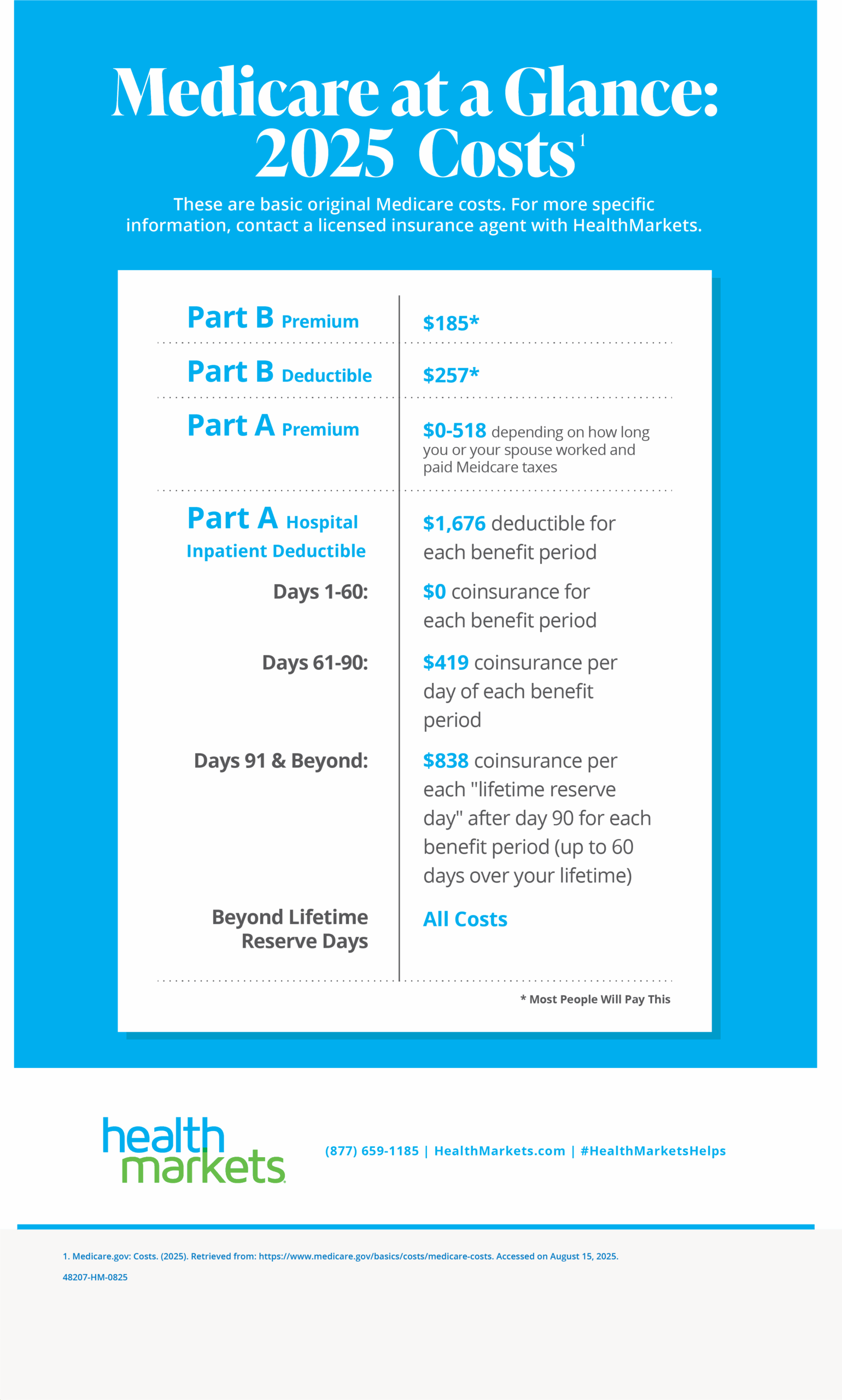
Read more » in a Medicare Advantage plan, you’ll continue to pay the standard Medicare Part B premium (medical insurance) set by Medicare, which is $185 per month in 2025.2
Depending on your income, you may pay a higher monthly premium. Most Medicare Advantage plans also have a monthly premium, although some are available with low or $0 monthly premiums.
How to make premium payments for Medicare Advantage
When you have a Medicare Advantage plan, you’ll pay two types of monthly premiums:
- One to Medicare, and…
- One to your private insurance company
Here’s a simple breakdown to help you understand how to make these payments.
Paying your Part B premium to Medicare
Your Part B monthly premium covers things like:3
- Clinical laboratory services ($0 for covered lab services)
- Home health care ($0 for covered home health carehome health careHealth care services a person receives at home.
Read more » services) - Inpatient hospital care (20% of the Medicare-approved amount for most services while you’re a hospital inpatient)
- Outpatient mental health care ($0 for a yearly depression screening. 20% of the Medicare-approved amount to diagnose and treat mental health)
- Partial hospitalization mental health care (20% of the Medicare-approved amount for mental health treatment, after you meet the Part B deductibledeductibleThe amount you pay for covered health care services before your insurance pays.
Read more ».) - Outpatient hospital care (Usually 20% of the Medicare-approved amount for doctor and other healthcare providerhealthcare providerA licensed person or organization that provides health care services.
Read more » services.)
Here’s how it works:
If you’re getting benefits from Social Security or the Railroad Retirement Board:
- The Medicare Part B premium is deducted automatically from the benefitbenefitThe health care items or services covered under a health insurance plan.
Read more » payment for most people.4
If you don’t get benefits:
If you aren’t receiving these benefits, Medicare will send you a bill.4 You can pay this in a few ways:
- By mail: Send a check or money order to the address on your bill.
- Online banking: Set up a one-time or recurring payment through your bank.
- Automatic bank draft: You can also sign up for Medicare’s bill pay option, which will take the premium from your bank account automatically every month.
Paying Part C premiums to insurance companies
Medicare Advantage (Part C) plan monthly premiums, go directly to your private insurance company.
Here’s how to handle this payment:
Deduct from Social Security5
- You may be able to have your Medicare Advantage Part C premium deducted from your Social Security benefit.
- This isn’t automatic. You’ll need to send a request to Social Security, and they will let you know if it’s approved.
Other payment options
If you don’t receive Social Security or don’t want to use that option, you can pay your Part C premium by:
- Mailing a check. Send a check to your insurance company each month.
- Automatic bank draft. You can set up an automatic draft from your bank account, so you won’t miss a payment.
4 tips for paying Medicare premiums
Keeping up with your Medicare premium payments is important to make sure you don’t lose your coverage. Here are a few simple tips to help you stay on track:
1. Pay on time for both Part B and Part C premiums
- Make sure to pay your Part B premium
- And if you have one, pay your Part C premium (for your Medicare Advantage plan) on time each month. This keeps your coverage active.
- Tip: It may help to set up automatic deductions if you can—this is an easy way to avoid missing a payment.
2. Update your mailing address
- If you get bills in the mail, it’s important that both Medicare and your Medicare Advantage company have your current mailing address.
- This is especially important if you don’t have automatic deductions from Social Security.
3. Don’t miss multiple Part B payments
- Medicare Part B premiums are due by the 25th of each month.4
- If you miss three months of payments, your Medicare coverage will end the following month.
- To avoid this, make payments by the due date or set up an automatic payment.
4. If you’re struggling to pay Medicare Advantage premiums…
- If you think you might miss a payment for your Medicare Advantage (Part C) plan, reach out to your insurance company right away.
- Each insurance company has its own rules on when they may cancel a plan for nonpayment, so it’s best to check in with them if you need help.
Medicare Advantage premiums vary based on three primary factors:6
- The state you live in
- The plan you choose
- Prescription drug coverage
- Supplemental benefits for things like visionvisionA health benefit that at least partially covers vision care, like eye exams and glasses.
Read more » care, oral health, hearing exams, and other benefits.
Each private insurer approved by Medicare to offer Medicare Advantage plans sets their own rates.
Insurance companies can adjust Medicare Advantage premiums annually, giving you predictable costs for at least a year at a time.
What are Special Needs Plans?11
Special Needs Plans are for individuals with specific severe and chronic diseases, certain health care needs or who also have Medicaid, there are Medicare Advantage Special Needs Plans (“MA SNPs”).
- MA SNPs included care coordination and offer tailored coverage along with other services to best meet the specific needs of the beneficiaries they serve.
- Medicaid may help pay some or all Medicare Advantage premiums and other expenses.
Medicare Advantage premiums in 2025
In 2025, the average monthly premium for Medicare Advantage plans with prescription drug coverage will be $17, which is $1.23 less than 2024 premiums.7
Here are a few things to keep in mind:7
- About 60% of Medicare Advantage enrollees may pay a premium as low as $0 a month 2025.
- About 83% of people who re-enroll in Medicare Advantage will pay the same or lower premiums than they did in 2024.
- For those who re-enroll in the same Medicare Advantage plan, about 20% will pay the same or lower premium as 2024 rates.
However, your costs may vary widely depending on the plan you choose, state you live in, and other benefits you select.
Why are some Medicare Advantage premiums as low as $0 a month?
If you’re wondering why some Medicare Advantage plans have premiums as low as $0 per month, you’re not alone.
Here’s how it works:
- Medicare Advantage plans are offered by private insurance companies approved by Medicare, covering all the benefits of Original Medicare (Parts A and B).
- Medicare pays these private insurance companies a set rate to handle claimsclaimsA payment request submitted to a health insurer for medical services and items.
Read more » for plan members.8 - Private insurance companies negotiate costs for healthcare services with the providers in their networksnetworksThe facilities, providers and suppliers your health insurer or plan has contracted with to provide health care services.
Read more ». - These savings allow private insurance companies to offer some Medicare Advantage plans for as low as $0 monthly premium.
- Medicare Advantage plans include all the benefits of Original Medicare (Parts A and B), and may cover additional health and wellness services.
Even if you have a $0 monthly premium for a Medicare Advantage plan, you’ll still pay for:
- Medicare Part A and B premiums
- Deductibles
- Copayments
- Coinsurance
Medicare Advantage MSA:
One special type of Medicare Advantage plan you might consider is a Medical Savings Account plan.
- An MSA plan is different from other Medicare Advantage plans because they don’t have a monthly premium.9
- However, this doesn’t mean the plan is entirely free—you will still need to pay the Medicare Part B premium each month, just like with any other Medicare Advantage plan.
So, how does an MSA plan work?
With an MSA plan, you have a high deductible, which is the amount you pay out-of-pocket for Medicare-covered services before the plan starts covering costs.
- To help with this, Medicare gives the plan an amount of money each year for your health care expenses and deposits it into a special savings account—the “medical savings account” part of the plan.
- The amount of money Medicare gives is based on your plan.
- You can use this money to help pay for your Medicare covered costs.
- Just keep in mind, you’ll still be responsible for your Part B premium and any healthcare costs up to your deductible.
You may not qualify for an MSA, if:
- You have health coverage (from an employer or union retiree plan) that would cover the Medicare MSA Plan deductible.
- You joined another Medicare Advantage Plan.
- You get benefits from the U.S. Department of Defense, TRICARE, or the U.S. Department of Veterans Affairs.
- You’re a retired Federal government employee and part of the Federal Health Benefits Program (FEHBP).
- You’re eligible for Medicaid.
- You’re currently getting hospice carehospice careServices to provide comfort and support for persons in the last stages of a terminal illness and their families.
Read more ». - You live outside the U.S. more than 183 (total) days a year.
How the Inflation Reduction Act impacted Medicare Advantage costs in 2025
The main goals of the Inflation Reduction Act (“IRA”) are to enhance Medicare by:10
- Expanding benefits
- Lowering drug costs
- Stabilizing prescription drug premiums, and…
- Strengthening the program for the long term.
Here’s how the IRA has made an impact on Medicare costs:
Lower costs for prescription drugs
- Beginning in 2025, the IRA replaced the Coverage Gap Discount Program also known as the “donut hole” in Medicare prescription drug coverage by requiring CMS to establish a Part D manufacture discount program.
- While this reduces costs for many people, it doesn’t mean medications are now free. Medicare enrollees still have out-of-pocket costsout-of-pocket costsYour expenses for medical care that aren't reimbursed by insurance.
Read more ». - In 2023, a monthly supply of insulin is capped at $35 for Medicare enrollees. Medicare has also negotiated lower drug prices with manufacturers for many medications commonly used by Medicare enrollees.10
Questions about Medicare Advantage premiums?
If you’re looking for a Medicare Advantage plan with additional benefitsadditional benefitsAn additional insurance plan, benefit, or rider that can enhance coverage or help pay for health care costs.
Read more », or want help comparing plans, we can help.
Just give us a call at (888) 486-1291 to speak with a licensed health insurance agent or find a licensed health insurance agent in your area.
1. Understanding Medicare Advantage Plans. (2024). Medicare.gov. Retrieved from: https://www.medicare.gov/publications/12026-Understanding-Medicare-Advantage-Plans.pdf Accessed on October 31, 2024.
2. 2025 Medicare Parts A & B Premiums and Deductibles. (2024). Retrieved from: https://www.cms.gov/newsroom/fact-sheets/2025-medicare-parts-b-premiums-and-deductibles Accessed on April 4, 2025.
3. Costs: Part B (Medical Insurance) costs. (2025). Retrieved from: https://www.medicare.gov/basics/costs/medicare-costs Accessed on April 4, 2025.
4. How to Pay Part A & Part B premiums. (2025). Medicare.gov. Retrieved from: https://www.medicare.gov/basics/costs/pay-premiums Accessed on April 8, 2025.
5. Hospital and Medical Insurance Benefits Provided. Social Security Administration. Retrieved from: https://www.ssa.gov/OP_Home/handbook/handbook.01/handbook-0127.html Accessed on April 8, 2025.
6. Medicare Advantage in 2024: Premiums, Out-of-Pocket Limits, Supplemental Benefits, and Prior Authorization. (2024). Kaiser Family Foundation. Retrieved from: https://www.kff.org/medicare/issue-brief/medicare-advantage-in-2024-premiums-out-of-pocket-limits-supplemental-benefits-and-prior-authorization/ Accessed on April 8, 2025.
7. Medicare Advantage and Medicare Prescription Drug Programs to Remain Stable as CMS Implements Improvements to the Programs in 2025. (2024). Centers for Medicare & Medicaid Services. Retrieved from: https://www.cms.gov/newsroom/fact-sheets/medicare-advantage-and-medicare-prescription-drug-programs-remain-stable-cms-implements-improvements Accessed on October 31, 2024.
8. Understanding Medicare Advantage Plans. (2025). Medicare.gov. Retrieved from: https://www.medicare.gov/publications/12026-understanding-medicare-advantage-plans.pdf Accessed on April 8, 2025.
9. Medicare Medical Savings Account (MSA) Plans. (2025). Medicare.gov. Retrieved from: https://www.medicare.gov/health-drug-plans/health-plans/your-coverage-options/MSA Accessed on April 8, 2025.
10. Saving money with the prescription drug law. (2024). Medicare.gov. Retrieved from: https://www.medicare.gov/about-us/prescription-drug-law Accessed on November 1, 2024.
11. Special Needs Plans (SNP). (2024). Medicare.gov. Retrieved from: https://www.medicare.gov/health-drug-plans/health-plans/your-coverage-options/SNP Accessed on November 1, 2024.