Medigap Plans: 6 Tips for Medicare Supplement Insurance
Looking for Medigap plans?
You know…A Medicare Supplement Insurance plan to bridge coverage gaps to help protect your health and your pocketbook. Medicare Supplement Insurance is also called Medigap.
Choosing the right Medigap plan has a lot to do with knowing when and how to buy.
But there are a lot of variables to consider, including your personal circumstances and preferences.
In this article, you’ll learn…
- How to break down the different situations that affect buying Medicare Supplement Insurance to help you better identify where you fit.
- How Medigap plans work and how rates are determined
- Six tips to help you choose the right Medigap plan when you’re ready to enrollenrollThe process by which an eligible person becomes a member of an insurance plan..
Ready to bridge the gap and get clear on Medicare Supplement Insurance?
Let’s get started.
What Is Medicare Supplement Insurance?
Medicare Supplement Insurance is a type of supplemental medical insurance for Medicare beneficiaries (people under age 65 are eligible for Medigap plans is they are already on Medicare).
Medigap plans are sold by private insuranceprivate insurancePrivate health insurance is health care coverage provided by a private insurance company rather than the government. companies to help cover some costs after Original Medicare (Medicare Parts A and B).1
- These costs are mainly out-of-pocket expensesout-of-pocket expensesYour expenses for medical care that aren’t reimbursed by insurance. such as copayments and coinsurancecoinsuranceThe percentage of costs of a covered health care service you pay after your deductible. for covered Medicare services.
- Medigap policies are designed to work only with Original Medicare. So, you must be enrolled in both Medicare Part A and Part B to buy a Medigap plan.
There are eight Medicare Supplement Insurance plans for new enrollees, which are represented by letters: A, B, D, G, K, L, M, and N.2
There are also two plans (C & F) that are available only to people who were eligible for Medicare before January 1, 2020.
- Each plan letter offers the same basic benefitsbenefitsThe health care items or services covered under a health insurance plan. from company to company. (In Massachusetts, Minnesota, and Wisconsin, plans offer a separate set of benefits.3)
- Insurance companies are not required to sell every Medicare Supplement plan, and some state laws could affect which plans are available in your area.
Medigap premiums: How much does it cost?
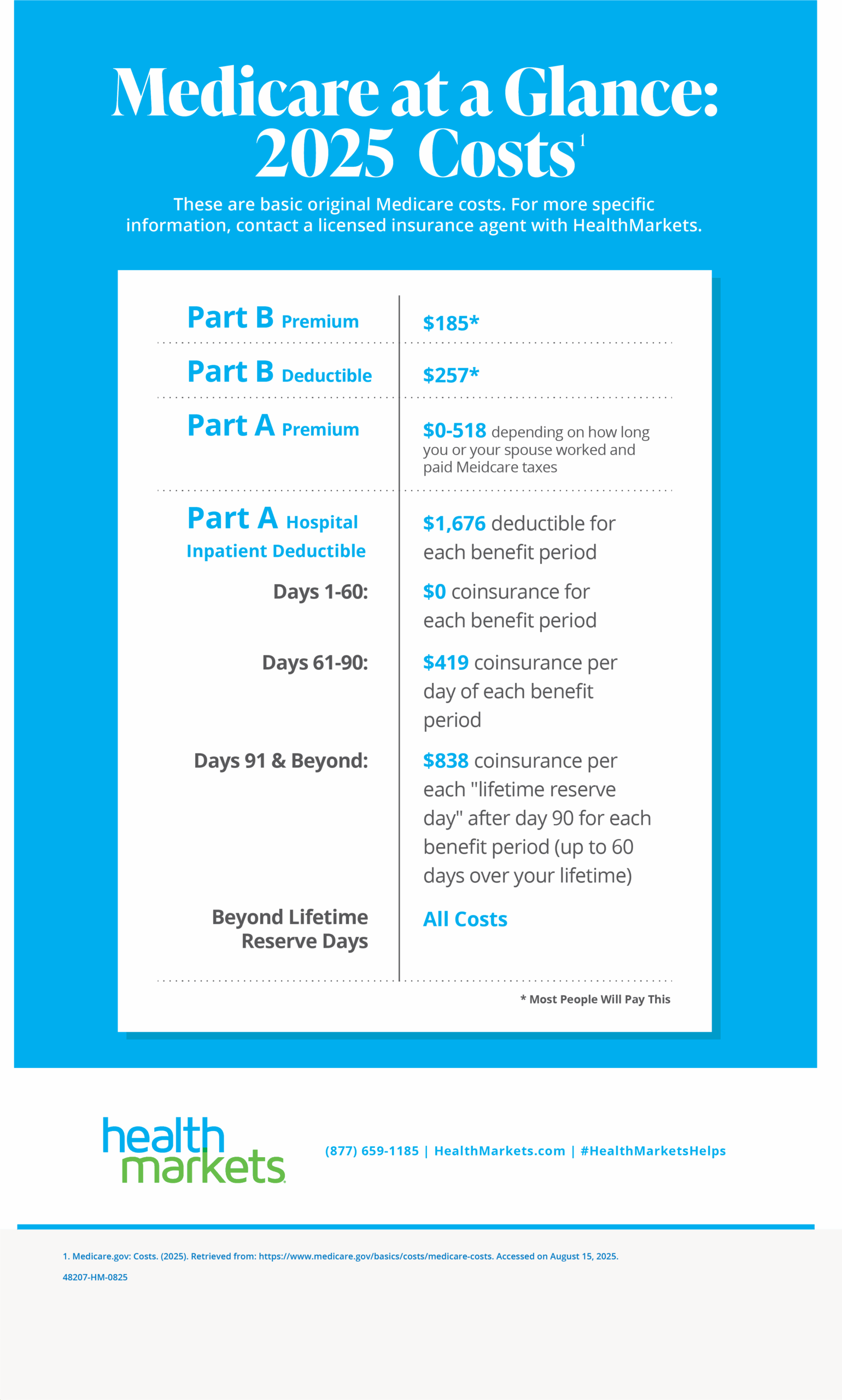
In addition to your Medicare Part B premiumpremiumThe amount you pay for your health insurance every month., you pay a monthly premium for Medigap.
Why? Medigap plans provide different levels of coverage, and premiumspremiumsThe amount you pay for your health insurance every month. vary by plan type.
The premiums charged for the same plan can also be very different from company to company.
Other factors that determine how much you pay for Medicare Supplement insurance include:3
- Your location.
- Whether your policy went through medical underwritingunderwritingA process to determine whether to offer you coverage, at what price, and with what exclusions or limits..
- Your age—companies can use:
- Issue-age-rated pricing based on your age when you bought the policy,
- Attained-age-rated pricing based on your age each year,
- Community-rated pricing where everyone pays the same regardless of age.
- Certain discounts, such as being a non-smoker, paying your premium annually, or paying using electronic funds.
6 Tips to Help You Choose Medicare Supplement Insurance
When you’re looking for Medigap plans to help protect your health and save on out-of-pocket medical costs, there’s a lot of variables to consider.
Here are six tips to help you choose a Medical supplemental insurance plan that’s right for you:
1. Buy Medigap during your Open Enrollment Period
Your Medigap Open Enrollment Period (OEPOEPThe yearly period (November 1 – January 15) when people can enroll in a Marketplace health insurance plan.) is the timeframe in which you can first buy any Medigap plan available in your area…
- Regardless of whether you have health problems, and…
- For the same price as a healthy person.
Your OEP lasts for 6 months. It starts on the first day of the month you’re 65 or older and enrolled in Medicare Part B.
- For example, if you turn 65 and enroll in Medicare Part B in May, then May 1 through October 31 would be the best time to enroll.4
If you choose to delay enrollmentenrollmentThe process by which an eligible person becomes a member of an insurance plan. in Medicare Part B and you don’t buy a Medigap plan when you’re first eligible, you might have to pay a Part B late enrollment penalty.
But there’s an exception if you’re eligible for Medicare and have job-based insurance.4
2. Delay Part B and Medigap enrollment when you’re still working
Are you or your spouse still working past the Medicare-eligible age?
Delaying Medicare Part B enrollment—which also delays your Medigap OEP—may be in your best interest if you have group health insurance through an employer or union.
Before you decide if you want to keep your employer insurance, it’s a good idea to review Medicare Supplement Insurance plans to ensure you opt for the right choice for you.4
4 reasons to delay Medicare Part B enrollment:7
Here are four reasons you may want to delay Medicare Part B enrollment if you have health insurance through an employer or union:
- Group health insurance. In most cases, group health insurance based on current employment is often similar to Medicare Part B coverage.
- Need for benefits. You won’t have to pay for Part B benefits before you really need them.
- Employer coverage ends. If you enroll in Part B when your employer coverage ends, you won’t have to pay the Part B late enrollment penalty.
- Savings. You can use your Medigap OEP when it’s more of an advantage to you.
Note: If you’re going to delay enrollment in Medicare Part B because you’re currently employed, contact Social Security to let them know.
- If you do choose to enroll in Part B while you have employer coverage, your Medigap OEP will start.
- If you don’t buy a Medigap plan during this time period, you will miss your OEP, and you won’t get another OEP when your employer coverage ends.4
3. Buy Medigap outside of your Open Enrollment Period
If you wait until after your OEP to buy a Medicare Supplement Insurance plan, an insurance company can use medical underwriting to determine whether you qualify for a policy.
- If you don’t meet underwriting requirements because of your health, the company doesn’t have to sell you a policy outside of your OEP—unless you have guaranteed issueguaranteed issueA requirement that health plans must permit you to enroll regardless of factors used to predict health services usage.
Read more » rights.4 - Medicare SELECT. These policies limit your healthcare providerhealthcare providerA licensed person or organization that provides health care services. choices to those within the plan’s networknetworkThe facilities, providers and suppliers your health insurer or plan has contracted with to provide health care services.. When you enroll in Medicare SELECT, you have 12 months to decide whether you want to keep this coverage or switch to a standard Medigap policy.5
4. Buy Medicare Supplement insurance when you have a pre-existing condition
You can buy Medicare Supplement Insurance if you have a pre-existing conditionpre-existing conditionA health problem, like asthma, diabetes, or cancer, you had before the date that new health coverage starts..
Is there a waiting periodwaiting periodThe amount of time that a policy holder must wait before coverage can be used.?
Maybe. Getting a Medigap policy during your Open Enrollment Period can avoid or shorten waiting periodswaiting periodsThe amount of time that a policy holder must wait before coverage can be used. for a pre-existing condition if you buy a Medigap policy to replace “creditable coverage.”6
- Creditable coverage is previous health insurance coverage that can be used to shorten a pre-existing condition under a Medigap policy.
While the insurance company can’t make you wait for your coverage to start, it may be able to make you wait for coverage related to a pre-existing condition.3
- A pre-existing condition is a health problem you have before the date a new insurance policy starts. In some cases, the Medigap insurance company can refuse to cover your out-of-pocket costsout-of-pocket costsYour expenses for medical care that aren’t reimbursed by insurance. for these pre-existing health problems for up to 6 months. This is called a “pre-existing condition waiting period.” After 6 months, the Medigap policy will cover the pre-existing condition.
3 ways to waive the waiting period
In certain instances, this “pre-existing condition waiting period” can or must be waived under the following circumstances: 8
- Prior coverage. If you buy a plan during the Medigap OEP and you’re replacing prior creditable coverage, the insurance company may waive or shorten the waiting period.
- 6-month mark. If you had at least 6 continuous months (with no break in coverage for more than 63 days) of prior creditable coverage, the insurance company is not allowed to make you wait before covering your pre-existing condition(s).
- Guaranteed Issue Rights. If you buy a policy because you have a guaranteed issue right, the insurance company cannot place a pre-existing condition waiting period on your policy.
Insurance company exclusions for Medigap plans
Unless you have a guaranteed issue right, an insurance company is allowed to exclude coverage for a pre-existing condition if the condition was treated or diagnosed within 6 months before the coverage start date of the Medigap supplemental insurance policy.
- However, your Original Medicare benefits would still cover treatment for your pre-existing condition.
- If the Medigap plan doesn’t cover it, you would have to pay your Medicare copaymentcopaymentFixed amount you pay for a covered health care service. or coinsurance out-of-pocket costs.4
Coverage for a pre-existing condition can only be excluded if the condition was treated or diagnosed within 6 months before your Medigap policy coverage starts. This is called the “look-back period.”
- Original Medicare will still cover the condition, even if the Medigap policy won’t, but you’re responsible for the Medicare coinsurance or copayment.
5. Buy Medigap supplemental insurance when you have a Guaranteed Issue Right
What are Guaranteed Issue Rights?
In certain situations—usually when other coverage you have changes in some way or you lose or drop other coverage—Medigap protections under federal law ensure that insurance companies cannot:6
- Deny you a policy because of your health.
- Charge you more for a policy because of past or present medical conditions.
- Issue you a policy with conditions, such as exclusionsexclusionsHealth care services that your health insurance or plan doesn’t pay for or cover. for pre-existing conditionspre-existing conditionsA health problem, like asthma, diabetes, or cancer, you had before the date that new health coverage starts.. (All pre-existing conditions must be covered.)
Don’t have a Guaranteed Issue Right to help you get a Medigap plan?
- In other cases, you have a “trial right” to try a Medicare Advantage plan and still enroll in a Medigap policy if you change your mind.
- You must apply for a Medigap policy within 63 days of the date your other coverage ends to use your guaranteed issue rights.
- Guaranteed issue rights apply to Medigap plans A, B, K, and L.6
6. Understand Medigap out-of-pocket costs
After Medicare pays the approved amount for a covered medical service, your Medigap policy usually kicks in to cover Medicare’s out-of-pocket costs.
- All Medigap plans require new enrollees to pay their annual Part B deductibledeductibleThe amount you pay for covered health care services before your insurance plan starts to pay.. The only plans that do not are available to those who turned 65 prior to January 1, 2020. .
- Plan type & percentage of costs. The percentage of the costs your Medigap benefits will cover, if any, depends on the plan type.
As shown in the chart below, some Medigap plans provide no coverage for certain benefits, while other benefits are covered at either:2
- 50 percent
- 75 percent
- 80 percent
- 100 percent
For example…
- You get 100 percent coverage for your Part B coinsurance or copayments under Medigap Plans A, B, D, G, M, and N.
- But you get 50% coverage on Plan K and 75% coverage on Plan L for Part B coinsurance or copayments.
Keep in mind, though, that there is no “good” or “bad” plan—the plan you choose depends on your needs and budget.
Also, a Medicare Supplement Plan that provides less coverage usually has a lower premium than a plan that provides a higher level of coverage.2
Medigap Benefit |
Plan A |
Plan B |
Plan C |
Plan D |
Plan F* |
Plan G* |
Plan K |
Plan L |
Plan M |
Plan N |
|---|---|---|---|---|---|---|---|---|---|---|
Part A coinsurance and hospital costs up to an additional 365 days after Medicare benefits are used up |
✅ |
✅ |
✅ |
✅ |
✅ |
✅ |
✅ |
✅ |
✅ |
✅ |
Part B coinsurance or copayment |
✅ |
✅ |
✅ |
✅ |
✅ |
✅ |
50% |
75% |
✅ |
✅* |
Blood (first 3 pints) |
✅ |
✅ |
✅ |
✅ |
✅ |
✅ |
50% |
75% |
✅ |
✅ |
Part A hospice carehospice careServices to provide comfort and support for persons in the last stages of a terminal illness and their families. Read more » coinsurance or copayment |
✅ |
✅ |
✅ |
✅ |
✅ |
✅ |
50% |
75% |
✅ |
✅ |
Skilled nursing facility care coinsurance |
❌ |
❌ |
✅ |
✅ |
✅ |
✅ |
50% |
75% |
✅ |
✅ |
Part A deductible |
❌ |
✅ |
✅ |
✅ |
✅ |
✅ |
50% |
75% |
50% |
✅ |
Part B deductible |
❌ |
❌ |
✅ |
❌ |
✅ |
❌ |
❌ |
❌ |
❌ |
❌ |
Part B excess charge |
❌ |
❌ |
❌ |
❌ |
✅ |
✅ |
❌ |
❌ |
❌ |
❌ |
Foreign travel exchange (up to plan limits) |
❌ |
❌ |
80% |
80% |
80% |
80% |
❌ |
❌ |
80% |
80% |
Out-of-pocket limit** |
N/A |
N/A |
N/A |
N/A |
N/A |
N/A |
$6,940 in 2023 |
$3,470 in 2023 |
N/A |
N/A |
Source: Medicare.gov2
*Some states offer Plans F & G with higher deductiblesdeductiblesThe amount you pay for covered health care services before your insurance pays. Read more ».
**Plans K & L will only pay a portion of approved services before you meet your out-of-pocket yearly limit and Part B deductible. After you meet them, the plan will pay 100% for approved services.
***Plan N pays 100% of the costs of Part B services. However, you may still have copayments for some office visits and certain emergency room visits.
Find a Medigap plan: 4 things to remember
Still need a little help with choosing a Medicare Supplement Plan? Here are four things to remember:
- Enroll in either Medigap or Medicare Advantage. You can’t have both at the same time.
- If you buy Medigap, you must enroll in a Medicare Part D plan to get prescription drug coverage.
- Premiums. Remember that you pay both your monthly Medicare Part B premium and Medigap premium.
- Check your OEP. If possible, wait until your Medigap Open Enrollment Period to buy a policy when it’s guaranteed to be issued.
Looking for a Medigap plan to protect your health and save money?
We can help. Call HealthMarkets at (844) 522-1422 for more information, or find a local licensed insurance agent today.
1. What’s Medicare Supplement Insurance (Medigap)? (2023). Retrieved from: https://www.medicare.gov/health-drug-plans/medigap Accessed on July 14, 2023.
2. Compare Medigap Plan Benefits. (2023). Retrieved from: https://www.medicare.gov/health-drug-plans/medigap/basics/compare-plan-benefits Accessed on July 14, 2023.
3. Choosing a Medigap Policy. (2023). Retrieved from: https://www.medicare.gov/publications/02110-medigap-guide-health-insurance.pdf Accessed on July 14, 2023.
4. When can I buy a Medigap policy? (2023). Retrieved from: https://www.medicare.gov/health-drug-plans/medigap/ready-to-buy/ Accessed on July 14, 2023.
5. Get Medigap Basics. (2023). Retrieved from: https://www.medicare.gov/health-drug-plans/medigap/basics Accessed on July 14, 2023.
6. Get ready to buy: Your Medigap Open Enrollment Period. (2023). Retrieved from: https://www.medicare.gov/health-drug-plans/medigap/ready-to-buy Accessed on July 14, 2023.
7. Fact Sheet: Deciding Whether to Enroll in Medicare Part A and Part B When You Turn 65. (2023). Retrieved from: hhttps://www.cms.gov/Outreach-and-Education/Find-Your-Provider-Type/Employers-and-Unions/FS3-Enroll-in-Part-A-and-B.pdf Accessed on July 28, 2023.
8. 3 Ways to Avoid Being Rejected or Overcharged for a Medigap Policy. (2021). Retrieved from: https://www.aarp.org/health/health-insurance/info-2021/avoid-medigap-mistakes.html Accessed on July 28, 2023.